
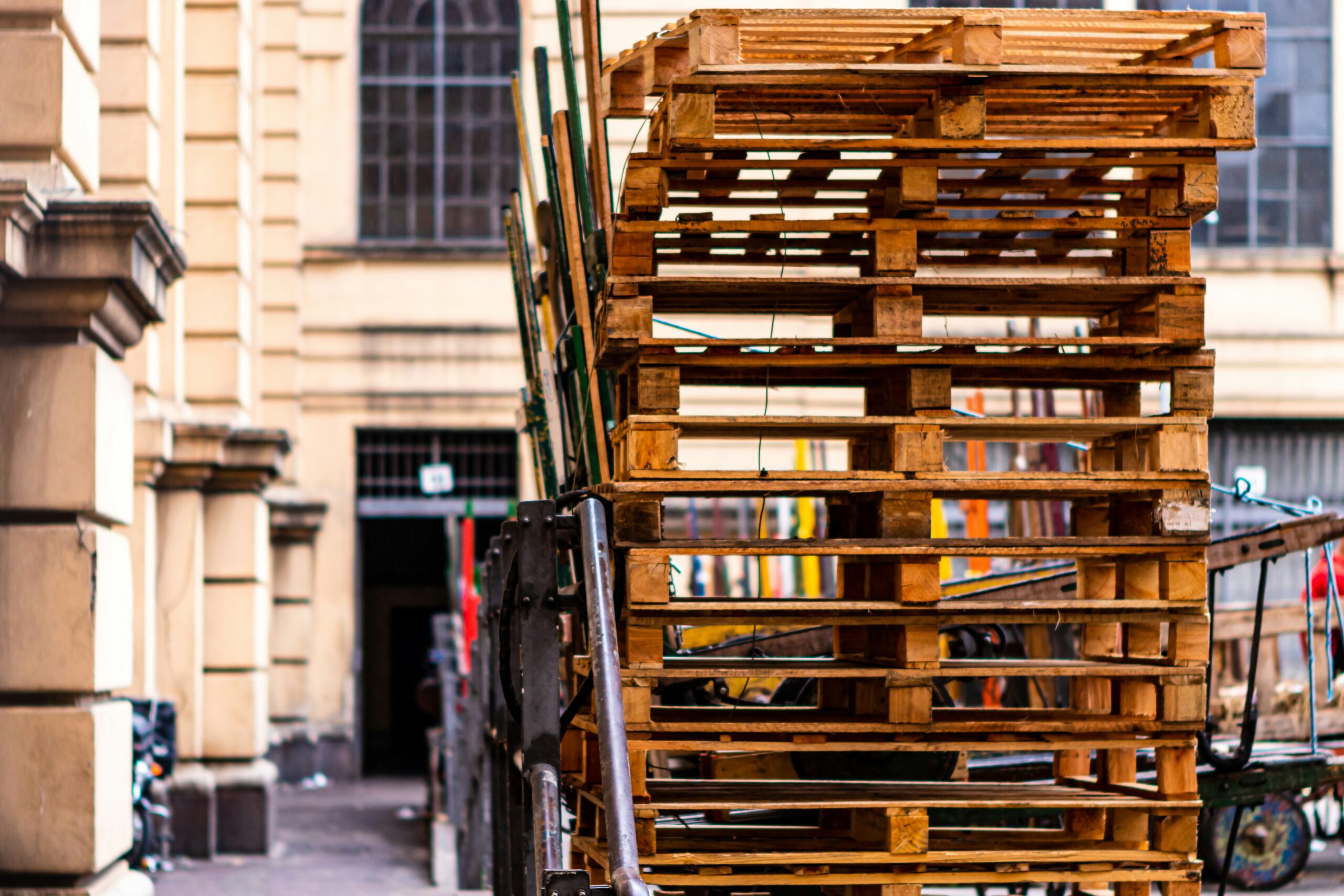
How to Transition Your Shipping Operations to Used Pallets Without Sacrificing Safety
How to Transition Your Shipping Operations to Used Pallets Without Sacrificing Safety
Transitioning to used pallets is not a purchasing choice but rather an adjustment in day-to-day operations that impacts adherence to regulations, worker well-being, and the steadiness of your loads. When done right, this uncomplicated, common-sense shift will save you actual cash, without creating risk. When done wrong, it encourages injuries and drives up rejection rates.
Every warehouse in the world receives goods on used pallets every day. In the US, there are about 1.8 billion pallets in service at any given time, with the used pallets economy supporting a network of suppliers, graders, and reclaimers who ensure most units get a second useful lifecycle, or more. The pre-owned market is not a niche within the sector; it’s the very substance of how materials are moved. For warehouse or shipping managers, the question is not "Is it safe to ship or receive goods on used pallets?" – it’s whether your processes are sufficient.
Start with the actual numbers, not the assumed savings
First, determine your actual costs. Calculate the cost per pallet for your major lanes, including one-way pallet fees, replacement rates, and disposal costs for damaged units. Many warehouse operators falsely assume that used pallets are less expensive, but they don’t quantify the difference.
Calculate the percentage of pallets returned across those lanes. From there, work out the cost of disposing of the used pallets you don’t sell for scrap. Subtract that disposal cost from the purchase price for your effective cost per used pallet. Voila! You’ve just generated the data you need to make a decision. Don’t let it go to waste.
ISPM-15 doesn’t care that the pallet is used
This is the critical point where a lot of transitions go wrong early. ISPM-15 compliance is married to the wood packaging itself, not to whether the pallet is new or has been through three previous shipments. Every pallet crossing an international lane needs a legible heat-treatment stamp. No stamp, no border crossing – it doesn’t matter how structurally sound the pallet is otherwise.
The problem with used stock is that repairs frequently damage or remove that stamp without anyone noticing. A stringer gets swapped, a deck board gets replaced, and the HT mark that was stamped into the original wood is now missing or half-covered by patch timber. If your receiving team isn’t specifically checking for a legible, intact heat-treatment stamp on every pallet destined for an international lane, you’re one customs hold away from a very expensive lesson. Domestic-only lanes don’t carry this risk, which is exactly why grading by destination matters as much as grading by condition.
Build a rejection list your dock staff can’t argue with
The main issue with most used-pallet programs is not the pallets themselves – it’s the lack of a written standard to determine if they should be accepted or rejected. If it’s left to interpretation, the results will not be consistently the same every shift, and eventually a pallet will be allowed through that had a cracked stringer because "it looked good from the top."
Create a list of reasons to reject and make it a hard rule. Items on this list should be cracked or split stringers – in fact, any crack that breaks a significant amount of the stringer renders the pallet ineligible, no exceptions. Missing or badly split deck boards, especially on the sheet-faced top where the load sits. Protruding or raised nails, which are the primary cause of injuries in pallet handling. Visible nail damage. Mold, rot, or moisture damage – decay is easily covered by dirt and paint. Broken or obscured ISPM marks on international loads.
Empower dock staff to reject on sight without needing a supervisor’s seal of approval. The moment that first requires an explanation or approval is the moment you start to notice damaged pallets and product sneak through because no employee ever wants to be the reason production slowed.
Not all repairs are equal – ask before you buy
A reclaimed pallet can either be as secure as a new one, or more risky than the damage it replaced. The latter largely depends on how the refurbishment was carried out. Industry-level refurbishing employs treated replacement wood that fits the original stringer and deck specifications, proper fasteners accurately fastened, and a final check according to a documented standard. A repair in a hurry, "skip and nail" – a split board being patched with scrap wood and nails lying around – can leave fasteners sticking out, timber mismatched and failing to support the load in the same manner, as well as entire load-bearing critical points failing under the intended stress.
Ask any supplier about their repair process. What wood is used for replacement boards? Is history of repair documented? Can ISPM-15 status post-repair be confirmed, rather than just before the pallet was damaged? A supplier who sorts and grades their stock and can readily answer such questions is a very different case compared to someone offering mixed pallets, with all of it, from a truckload with no paperwork.
This explains why the origin is as critical as the inspection process. Purchasing a Used Pallet in Melbourne from a dealer who grades and certifies their stock provides you with a documented starting point even before your inspection process takes off – a very different case from buying an unsorted mixed load from a marketplace listing or a scrap yard, where unknown wood, unrepaired damage, and unverified compliance history are all thrown and mixed into the same pile of pallets. Inspecting the supplier is not an optional step – it’s the control that determines how much work your receiving team has to do on every single load.
Grade your stock so the pallet matches the job
Every load doesn’t demand the identical pallet. A three-tier grading system takes care of this neatly:
Grade A pallets go to heavy loads and export shipments – solid stringers, full deck coverage, minimal repair history, intact ISPM stamps. Grade B covers standard national shipments, palletized retail goods, and general warehouse movement – sound structurally, may display cosmetic wear or minor prior repairs. Grade C is for light, one-way loads only – internal moves, short-haul moves, anything in which a pallet failure would not create a safety event or product loss.
Educate your palletizing staff to really use these tiers when building loads, not just when getting inventory. A heavy pallet of canned products doesn’t have any business sitting on a Grade C pallet simply because it was the closest one on the dock. This is also where GMA-standard sizing matters – if your distribution chain runs on the standard 48×40 footprint common in retail and FMCG, mixing in odd-sized used pallets creates racking and stacking issues with nothing to do with pallet condition and everything to do with fit.
Load limits protect what your eyes can’t verify
New pallets are sold with a design-rated load. Used are not and even a pallet that passes visual inspection may have fatigue internally you cannot see from the outside. This is why grade-based Safe Working Load limits matter more for used stock than new.
Set conservative SWL figures for each grade and enforce them at the point of load-building, not as an afterthought. A Grade B pallet rated conservatively for 500kg shouldn’t be loaded to 800kg just because it looks solid. The unit load concept applies here too – the pallet, the product, and the wrapping form one system, and a pallet operating past its safe limit compromises the entire load regardless of how well it’s wrapped or strapped.
Pilot before you roll out
Don’t go all in at once. Conduct a four-to-six-week pilot on a single low-risk domestic lane. Measure four metrics against your existing baseline: pallet damage rate, load-stability complaints from receiving customers, worker incident reports related to pallet handling and actual cost per shipment.
A pilot does double-duty as a trial run and an education in real-world factors your warehouse staff can’t anticipate, such as how the new pallet mix will behave with your existing fasteners, wrappers, and automatic equipment. For example, properly nailed or stapled new pallets can sometimes jam or damage automatic nailers and staplers; pallets at the large end of acceptable size can literally "jam up" your conveyors; and magnets strong enough to pick up a large load of pallets at once can crush thinner, lighter fasteners used on new pallets. Bugs and inefficiencies that crop up during the pilot can be worked out at small scale rather than on a company-wide level.
Make worker protection a standing procedure, not a poster
Gloves and closed footwear should not only be recommended but mandatory for pallet handling. Safety shoes are common workwear these days and there is no good reason not to require them at all times in the plant, including during pallet handling. Fork drivers, forklifts, and pallets are 3 of the most dangerous things in a warehouse, yet workers in the plant often have open-toed sandals.
Pallet damage between inspections can go unnoticed, and the rougher the handling, the truer that is. Any worker who flags a pallet as unsafe mid-shift needs the authority to pull it from service immediately, without waiting for a supervisor to confirm. Inspect racks frequently for "recent" scuff and scratch damage where forklifts have been mistakenly hitting the rack not the pallet or mis-gauging entry/lift.
The transition works when it’s a system, not a purchase
Reused pallets form a proper, established section of the supply chain, and the savings really are substantial. The businesses that come a cropper are those who treat the switch as a one-off purchasing decision rather than as an ongoing management procedure. Grade your stock, vet your supplier, note your rejection standards, and pilot before you scale. Get that system working correctly and the cost savings will look after themselves – without anyone coming to harm or a shipment being held at the border.